
This article is the first in a series. The remaining articles turn the architecture described here into a self-contained lab and examine its applications, agent roles, safeguards, evidence model, and defensive visibility.
Reconnaissance has always been one of the most important parts of a security assessment. Before testing controls, validating exposure, or investigating potential paths through an environment, you first need to understand what is actually there. Servers, applications, identities, network services, cloud resources, APIs, security products, and configuration details all contribute pieces of the overall picture.
Traditionally, that discovery process is performed through a collection of tools and scripts. A network scanner identifies systems and open ports. A web application scanner enumerates pages and endpoints. PowerShell or API queries gather information from Active Directory or Microsoft Entra ID. Other utilities inspect certificates, DNS records, software versions, permissions, routes, firewall rules, and security configuration.
Each tool can be useful, but the analyst is ultimately responsible for connecting everything together. That is where AI agents introduce an interesting change.
Rather than thinking about AI simply as something that interprets scanner output, an agent can be given responsibility for a particular part of the reconnaissance process. Multiple agents can then collaborate, sharing what they discover and allowing one observation to influence what another agent investigates next.
The result is not necessarily a faster port scanner or a smarter vulnerability scanner. It is a different way of orchestrating the reconnaissance process.
Reconnaissance Is Really a Reasoning Problem
Consider what happens during even a relatively simple security assessment. You discover a web server. The server exposes several applications. One application references an API. The API reveals information about an authentication provider. That authentication system exposes information about identities or groups. A certificate identifies another hostname. DNS resolution points to another server. That server exposes a management service.
None of those discoveries necessarily represents a vulnerability. What matters is the relationship between them. Experienced security testers continuously perform this correlation mentally. They ask questions such as:
- What does this discovery tell me about the environment?
- Does it expose another system that should be investigated?
- Is this service connected to something I discovered earlier?
- Does this identity have access somewhere else?
- Is this hostname part of another application?
- Does this configuration suggest another path worth examining?
Reconnaissance is therefore not simply data collection. It is iterative reasoning. That makes it particularly interesting for agent-based AI systems.
Moving from Tools to Agents
Imagine dividing reconnaissance into several specialist roles.
A network reconnaissance agent might concentrate on hosts, ports, protocols, DNS information, certificates, and network relationships.
An application reconnaissance agent could examine websites and APIs, discovering routes, metadata, authentication mechanisms, headers, application technologies, and references to other services.
An identity agent might analyze information about users, groups, roles, service identities, authentication providers, and authorization boundaries.
A cloud reconnaissance agent could examine publicly exposed cloud resources, application registrations, service endpoints, storage services, and infrastructure metadata.
Another agent might focus specifically on security controls, looking for evidence of firewalls, endpoint protection, authentication requirements, conditional access decisions, logging, rate limiting, or other defensive mechanisms.
None of these agents has to understand the entire environment. Their value comes from specialization combined with collaboration.
The Shared Knowledge Problem
Once multiple agents are involved, something has to connect them.Suppose an application reconnaissance agent discovers:
https://portal.example.com/api
While inspecting that API it discovers a reference to:
identity.example.com
The application agent may not be responsible for investigating identity infrastructure. Instead, it can publish what it found into shared state. An identity-focused agent can then pick up that observation and continue from there. It might discover a particular authentication mechanism or a set of roles. Those findings could then become useful to another agent responsible for access validation. This creates a workflow that looks less like:
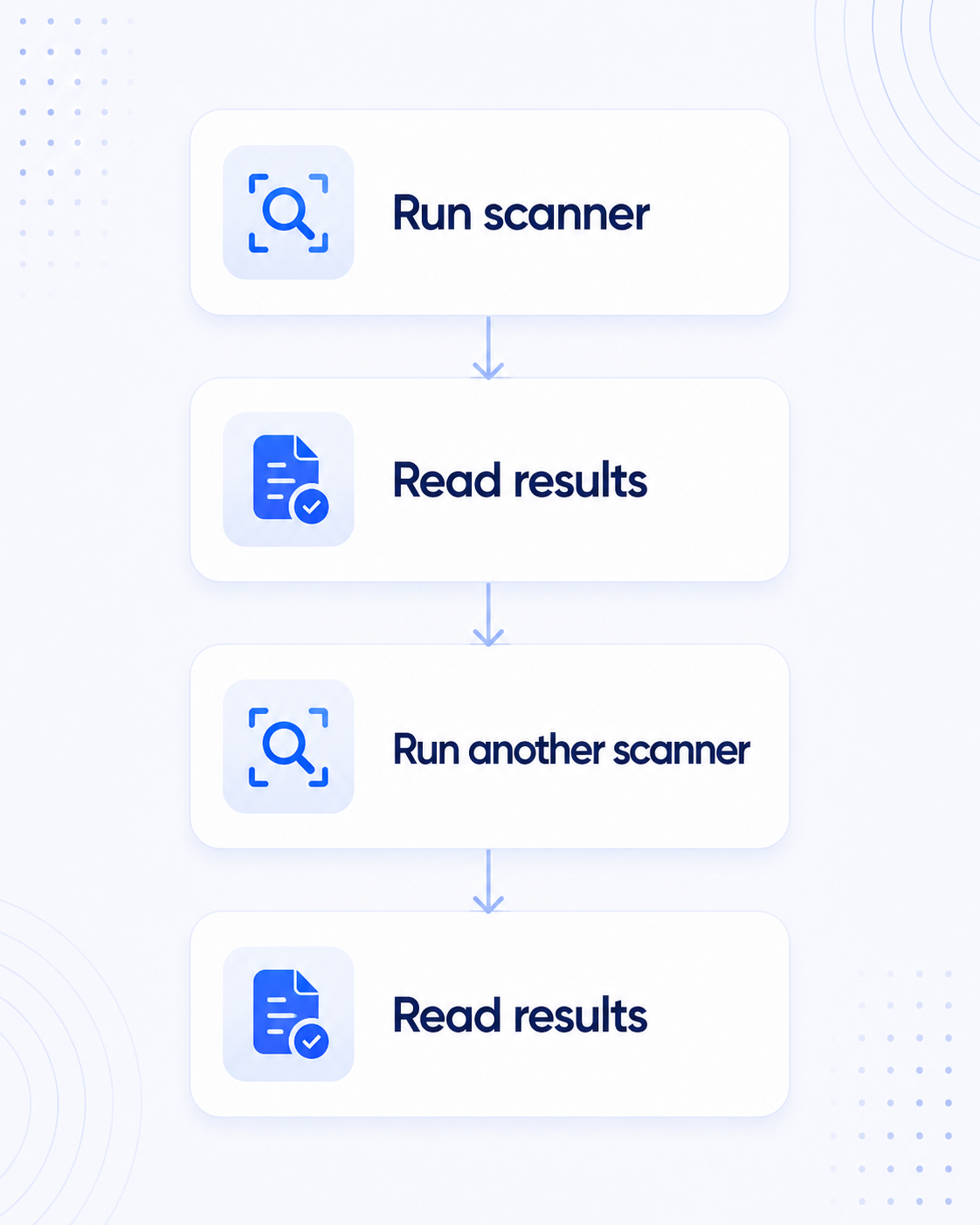
And more like:
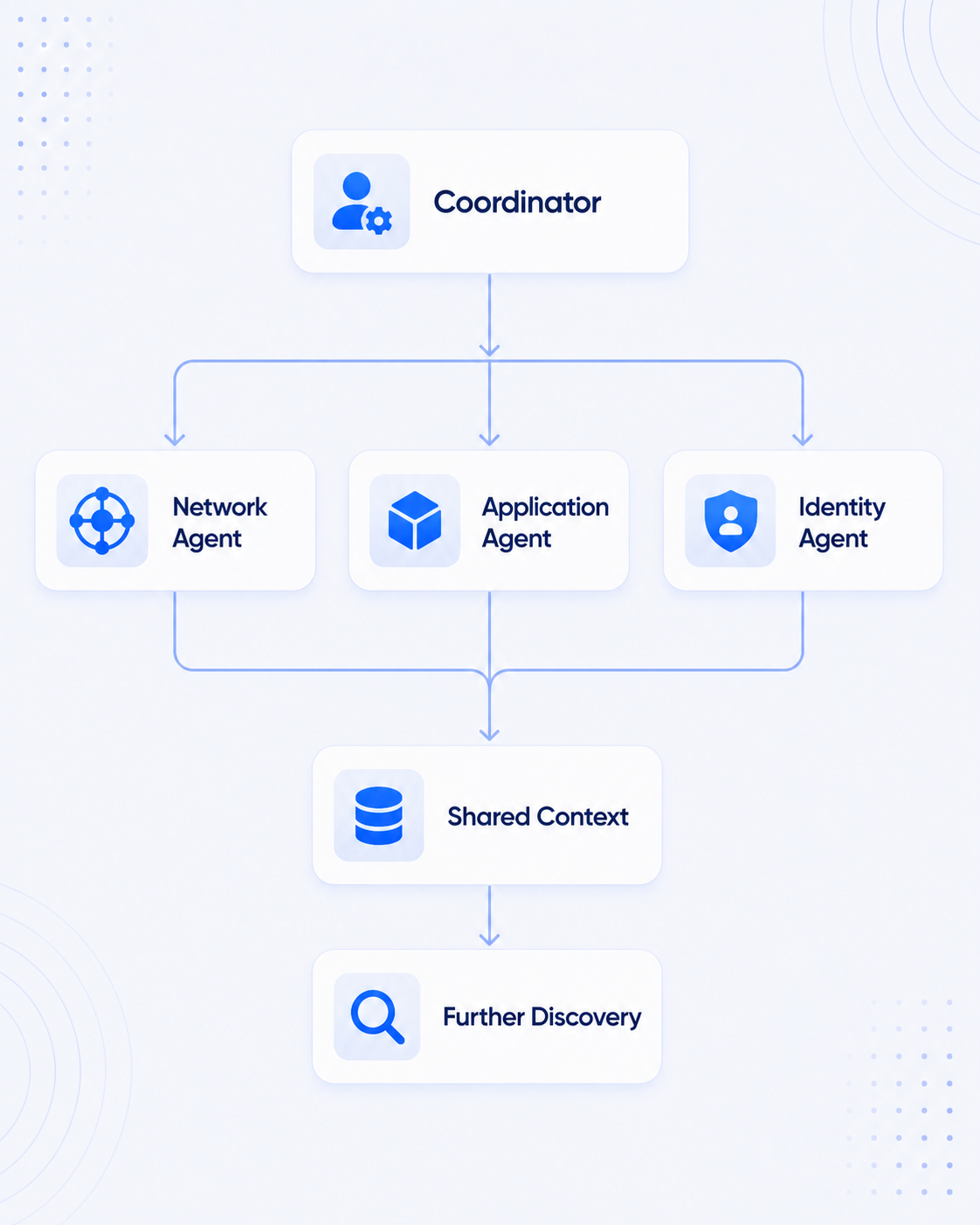
The important component is the shared context. Agents need somewhere to publish observations, retrieve previous discoveries, create tasks, and record conclusions. That shared state effectively becomes the working memory of the assessment.
One Discovery Can Create Another Task
This is where agent-driven reconnaissance becomes more interesting than simply wrapping AI around existing command-line tools. An agent can make a discovery and decide that another action should occur. For example:
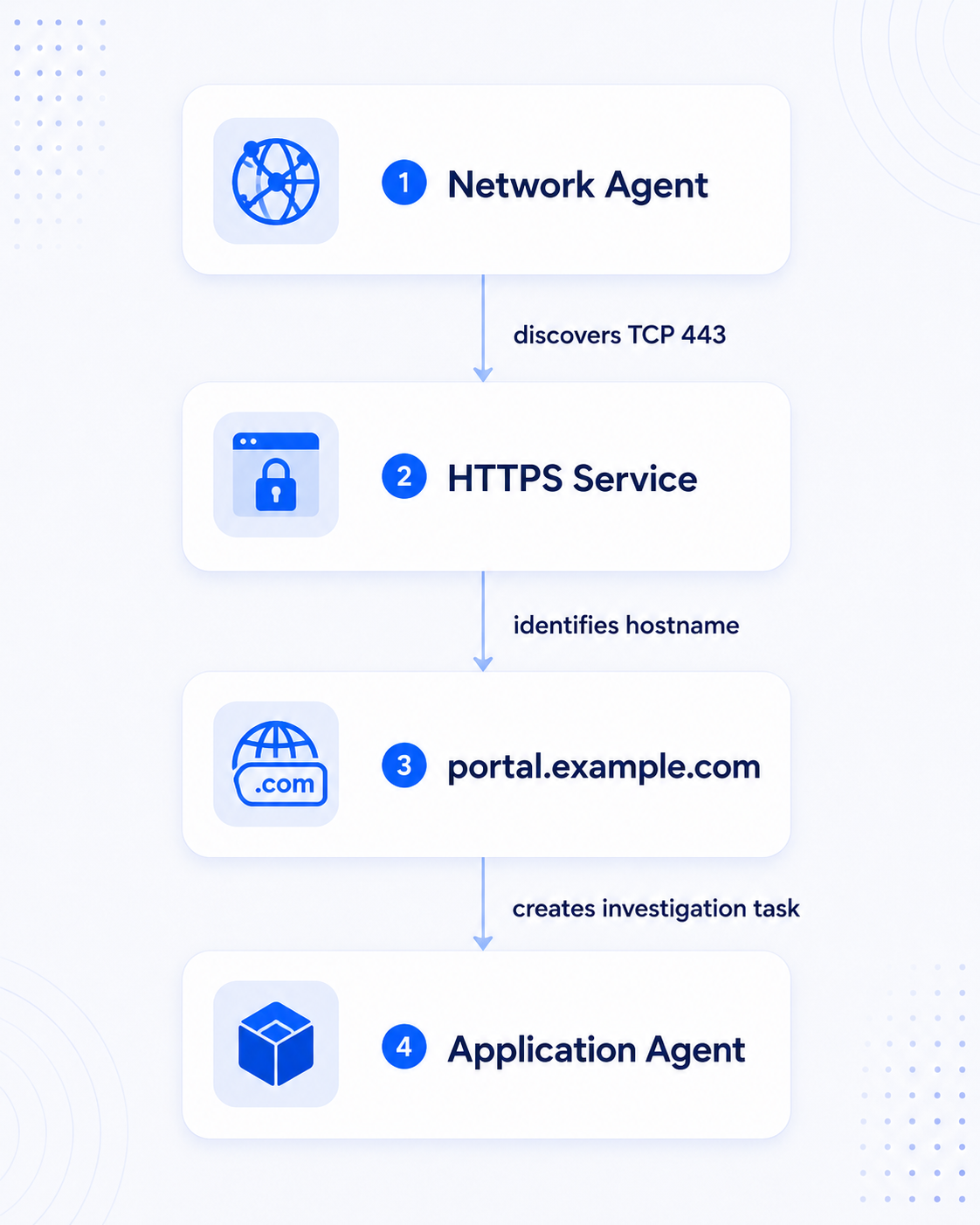
The application agent might then discover an API:
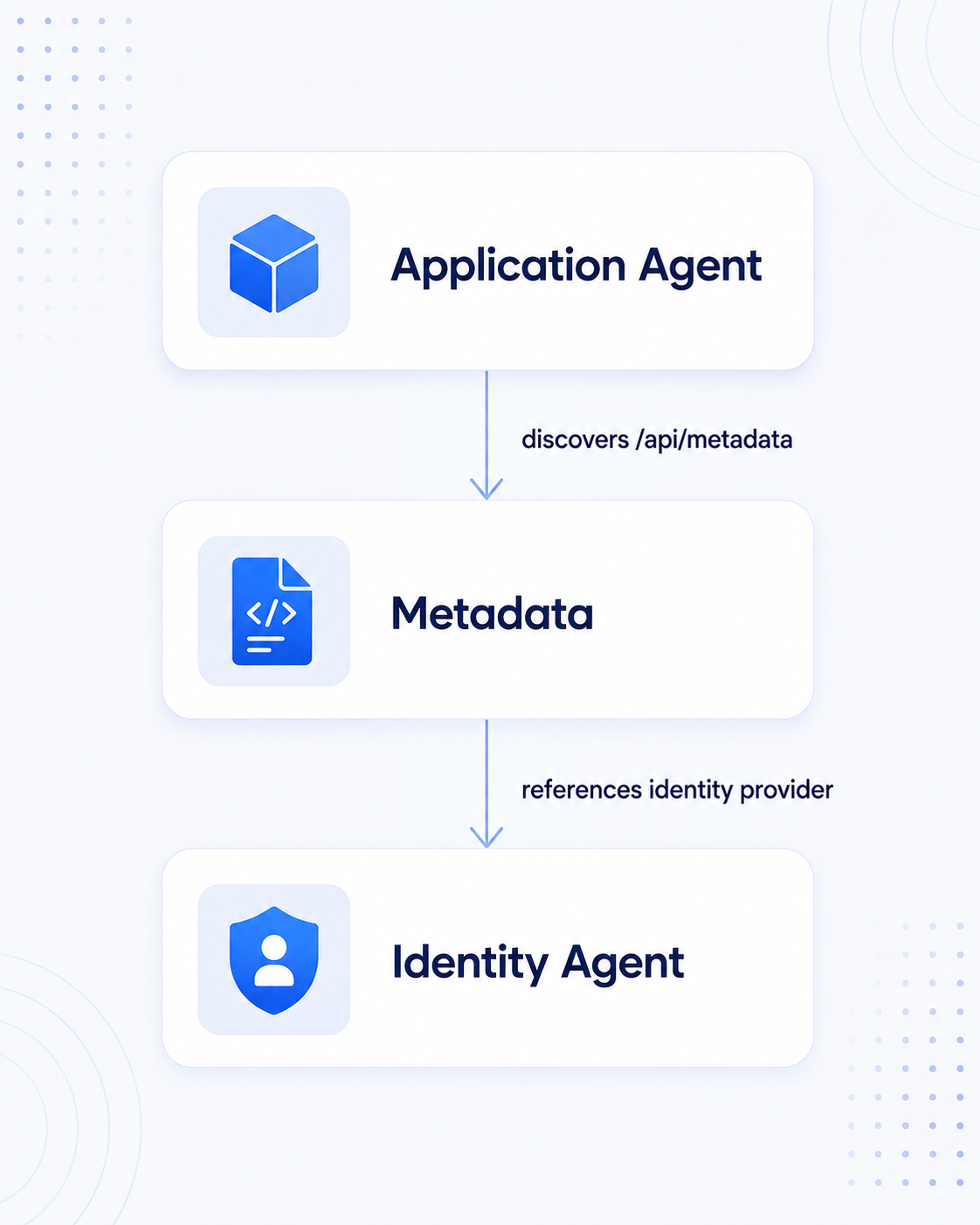
The identity agent could identify information relevant to authorization:
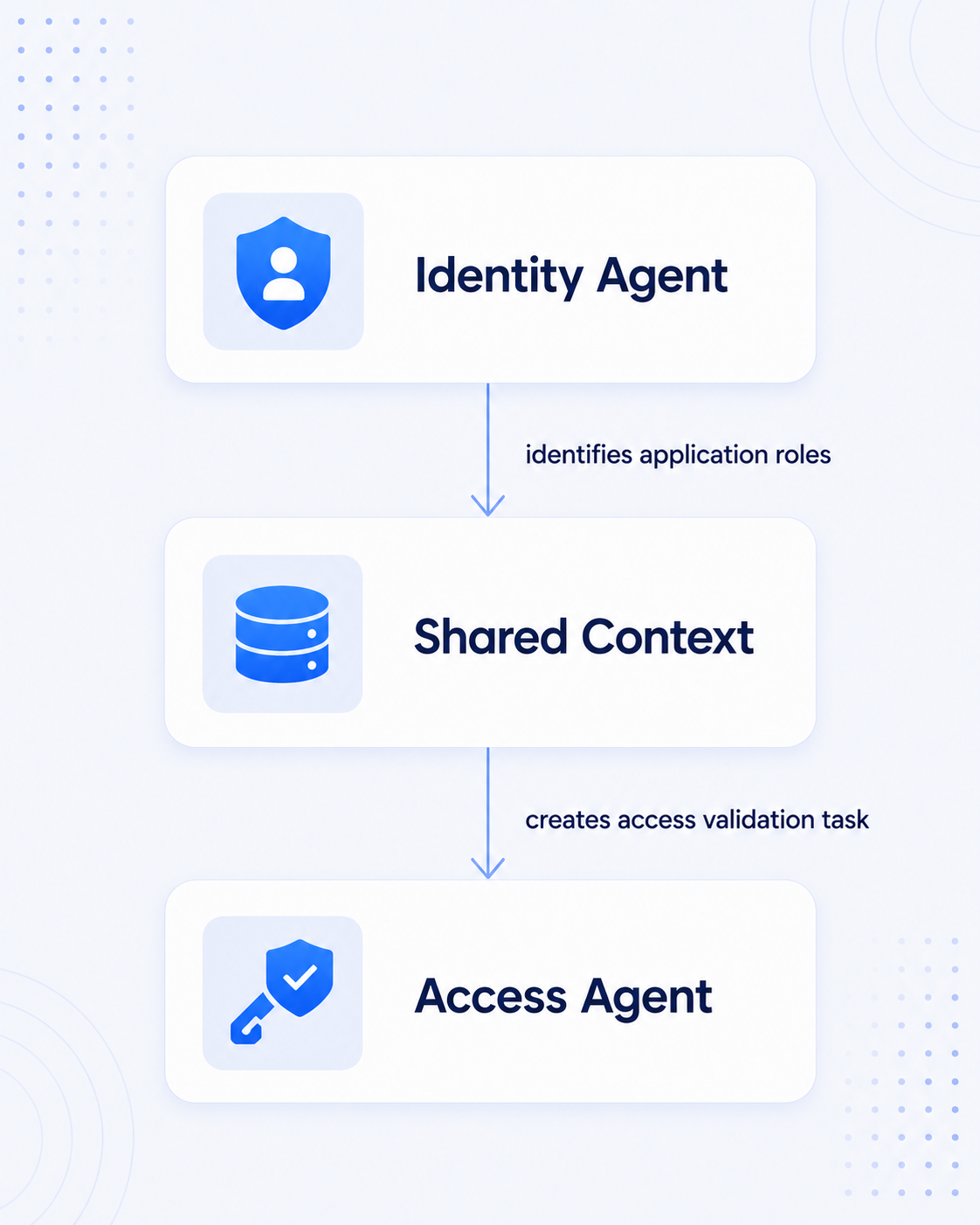
At that point, the system is not following a completely predetermined sequence. The reconnaissance process is beginning to react to what it discovers. That distinction matters.
AI Does Not Replace the Reconnaissance Tools
There is an important misconception worth addressing. The AI agent does not need to replace Nmap, PowerShell, HTTP clients, DNS utilities, cloud APIs, or other established security tools. Those tools are already very good at what they do.
A better architecture is often to let deterministic tools perform deterministic work while the agent handles reasoning and orchestration. For example, an agent could decide that DNS information is required and invoke an approved DNS lookup capability. It could inspect the result, determine that a hostname deserves further investigation, record that decision, and create another task. Think of the relationship as:
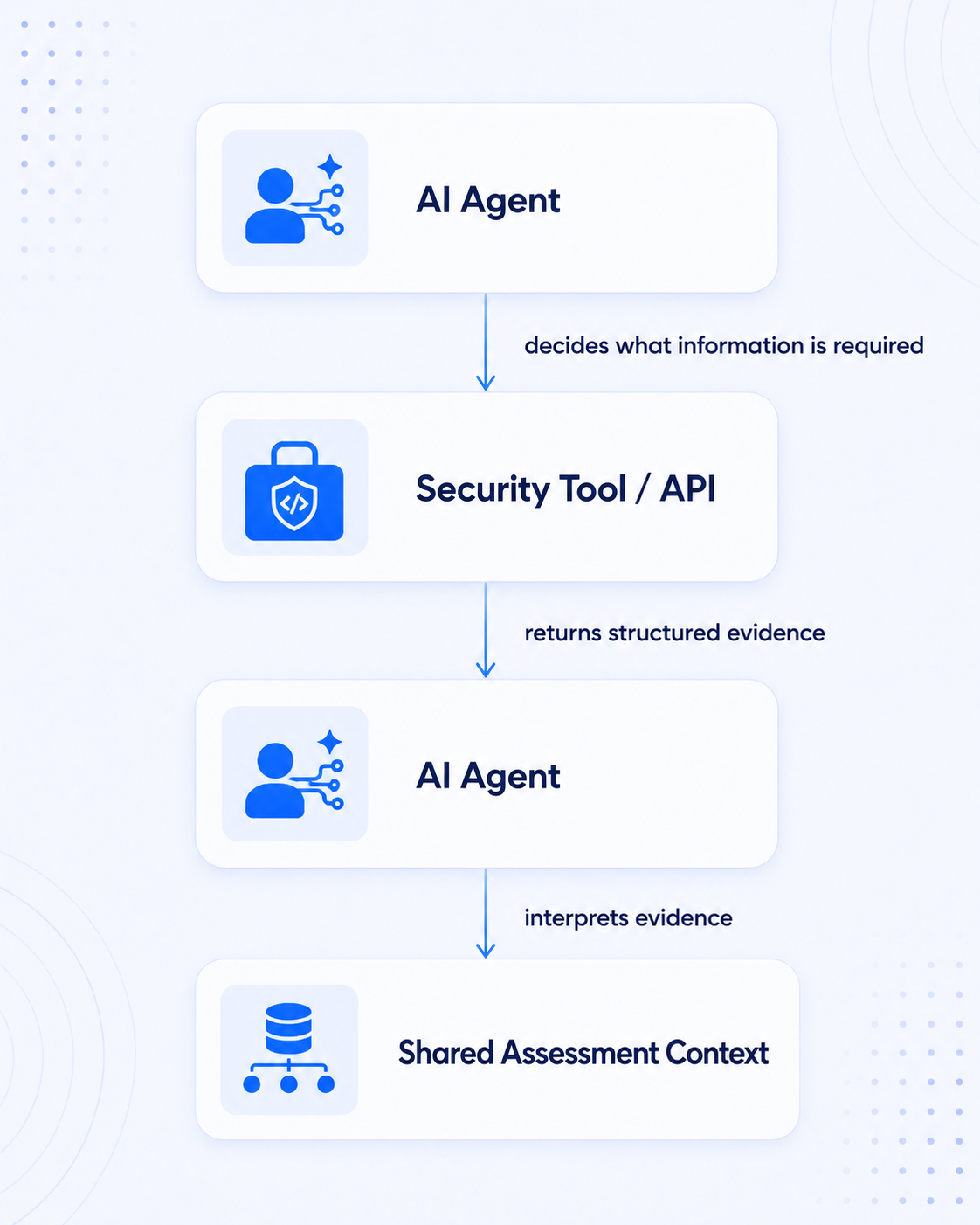
The security tool provides evidence. The agent provides context. That separation is extremely useful because it also makes the system easier to control.
The Coordinator Becomes Important
Once several agents are working simultaneously, another problem appears.
- Who controls the assessment?
Without orchestration, agents could repeatedly investigate the same systems, generate unnecessary traffic, exceed the agreed scope, or create an endless chain of low-value tasks. A coordinator can provide that control plane. Its job is not necessarily to perform reconnaissance itself. Instead, it can manage the workflow.
The coordinator can determine which tasks are outstanding, which agents are responsible for them, which discoveries have already been investigated, and whether the overall objective has been reached. Conceptually, the architecture begins to look like this:
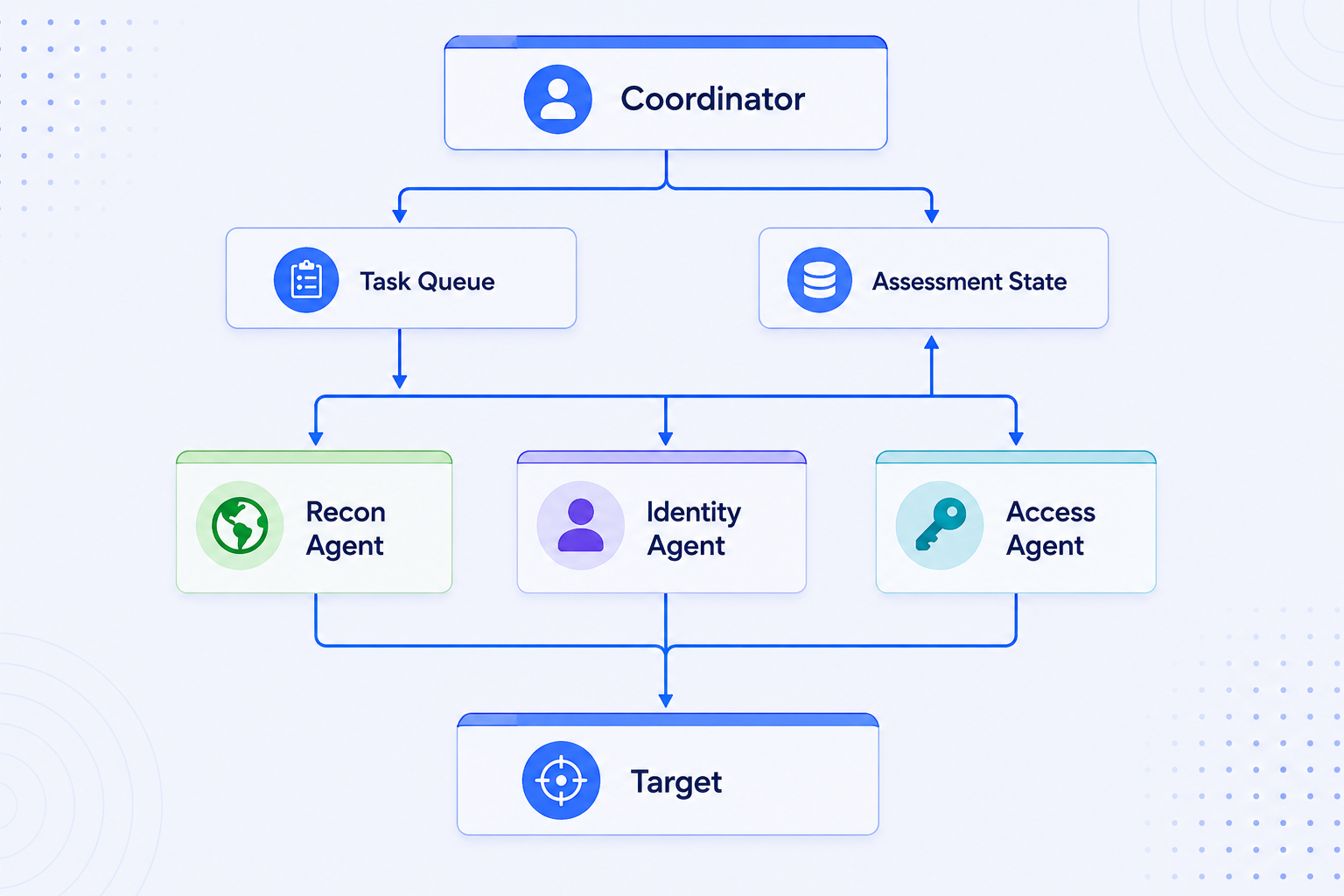
This is very different from giving a single AI model unrestricted access to a shell and asking it to "test the network."
- Responsibilities are separated.
- Actions can be constrained.
- Findings can be recorded.
- The workflow can be inspected.
Most importantly, the system can be designed around the scope of the security test.
Scope Has to Exist at the Architecture Level
Security testing always operates within boundaries. An agent-based assessment should be no different.
The permitted targets, protocols, actions, credentials, tools, and testing techniques should be defined before an agent begins operating.
For example, the scope might restrict reconnaissance to:
10.10.20.0/24
portal.lab.local
api.lab.local
Attempts to investigate anything outside those boundaries should be rejected by the tooling layer rather than relying solely on an AI model to remember the instruction. That means safety becomes an architectural property. Instead of:
Agent > unrestricted operating system
A better model is:
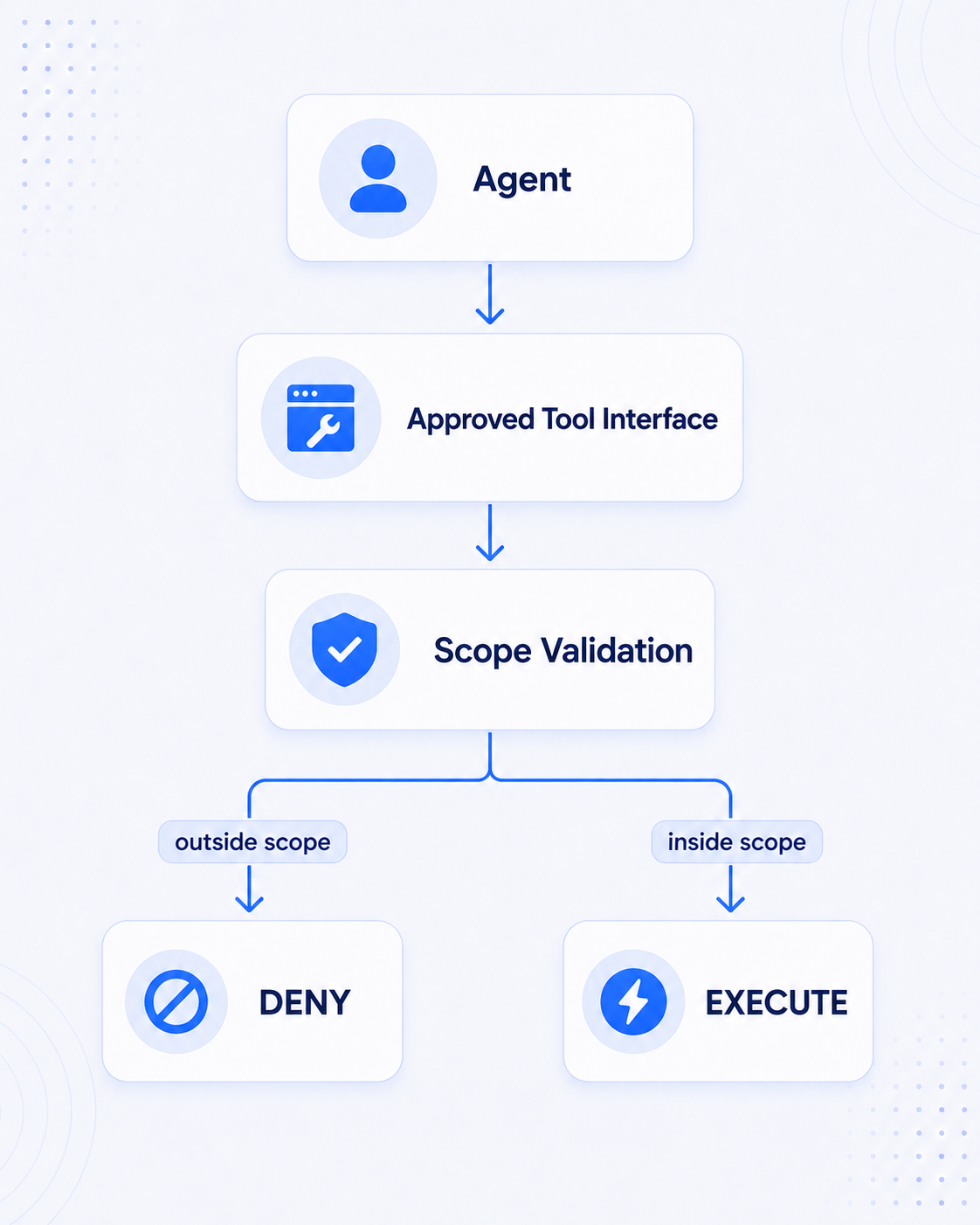
The same idea applies to credentials, request rates, network ranges, API calls, and potentially disruptive testing techniques. Agents should make decisions within the assessment.
They should not define the boundaries of the assessment themselves.
Reconnaissance Becomes Collaborative
The most compelling part of this architecture is what happens when agents begin contributing different perspectives to the same target. Consider a server discovered during an assessment. The network agent might record:
Host: 10.20.30.15
Ports: 80, 443
TLS hostname: research.example.local
The application agent adds:
Application: Research Portal
API: /api
Metadata endpoint: /metadata
Authentication required: Yes
The identity agent contributes:
Identity provider: ExampleID
Authentication: OIDC
Roles referenced: ResearchUser, ResearchAdmin
A defensive agent could simultaneously record:
Web requests logged: Yes
Authentication failures logged: Yes
Reconnaissance sequence detected: No
The assessment now contains far more than scanner output. It contains a connected model of the environment. That model can continue to evolve as new evidence appears.
The Defender Can Be an Agent Too
There is another side to this idea that I find particularly interesting.
- Why should only the testing side use agents?
A defensive agent can observe the exact same activity from the opposite perspective. While reconnaissance agents enumerate the environment, a defender agent can examine logs, authentication events, application requests, alerts, and other telemetry. The two systems can effectively observe the same security test from opposite sides.
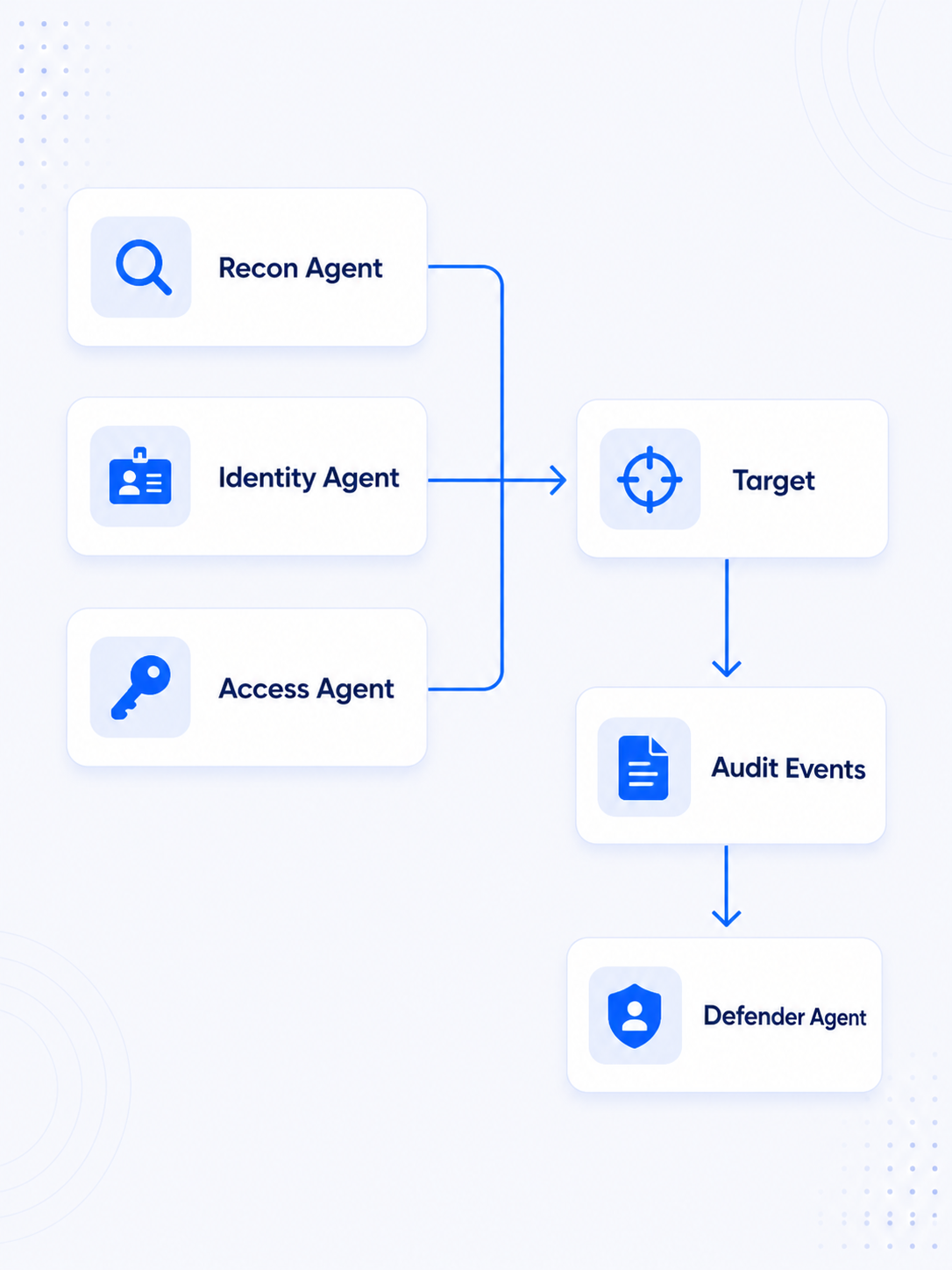
This creates an excellent security training opportunity. The learner can see what the reconnaissance agent did, what evidence caused it to make the next decision, and what telemetry that activity produced on the defensive side. That is much more valuable than simply watching a scanner produce a list of ports.
It connects attacker activity, system behavior, and defensive visibility.
Building a Safe Environment to Explore This
To explore these ideas properly, a controlled lab is useful. Rather than pointing autonomous agents at real systems, the environment can contain an intentionally simple target application and several specialized agents. The architecture we will use follows that approach.
A coordinator starts the assessment and manages the workflow. A reconnaissance agent performs initial discovery. An identity agent interprets information relevant to authentication. An access agent handles a later validation step. A defender observes the resulting audit activity. The agents communicate using shared state rather than having one giant agent perform every task. At a high level, the workflow looks like this:
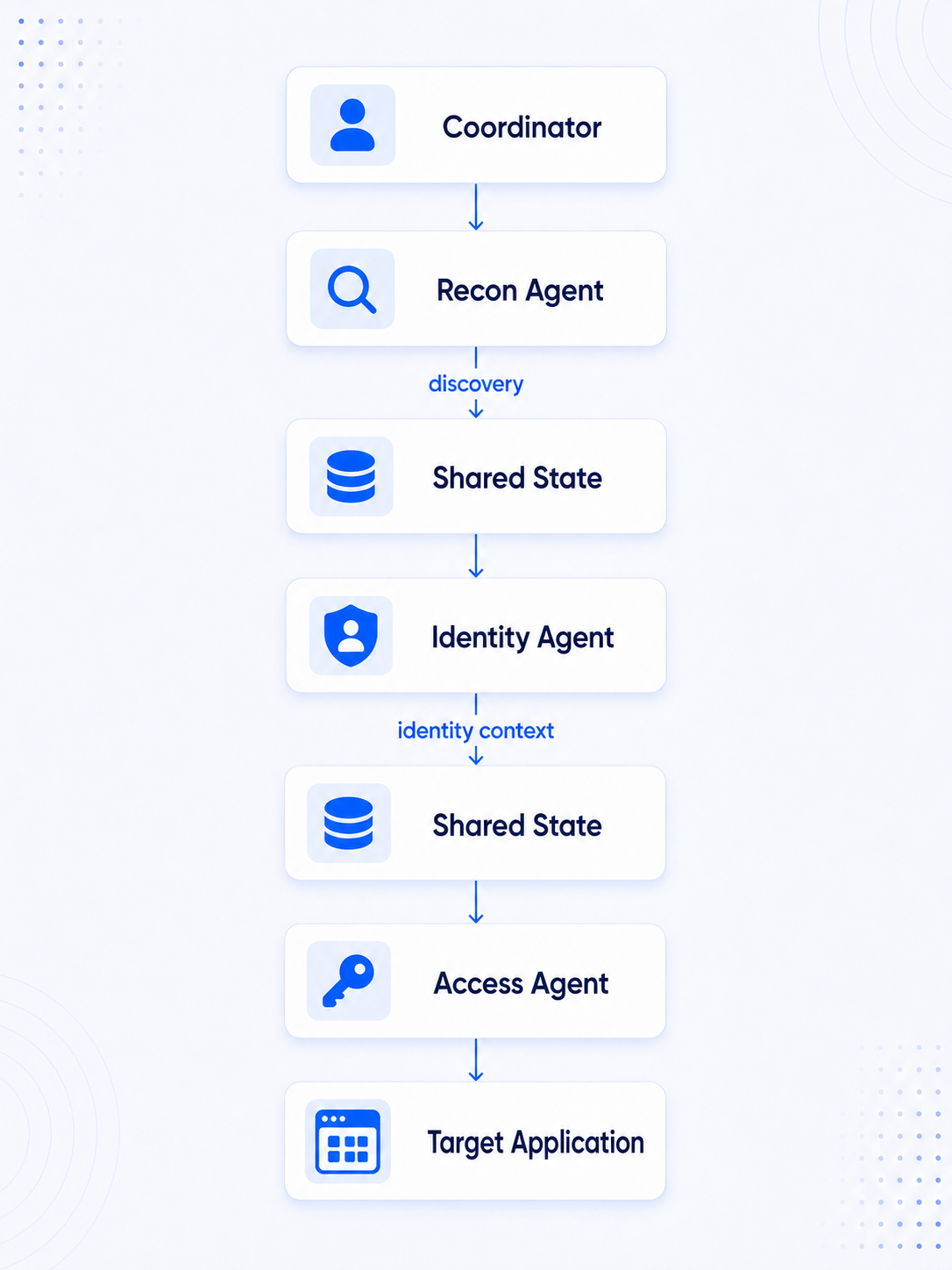
At the same time:
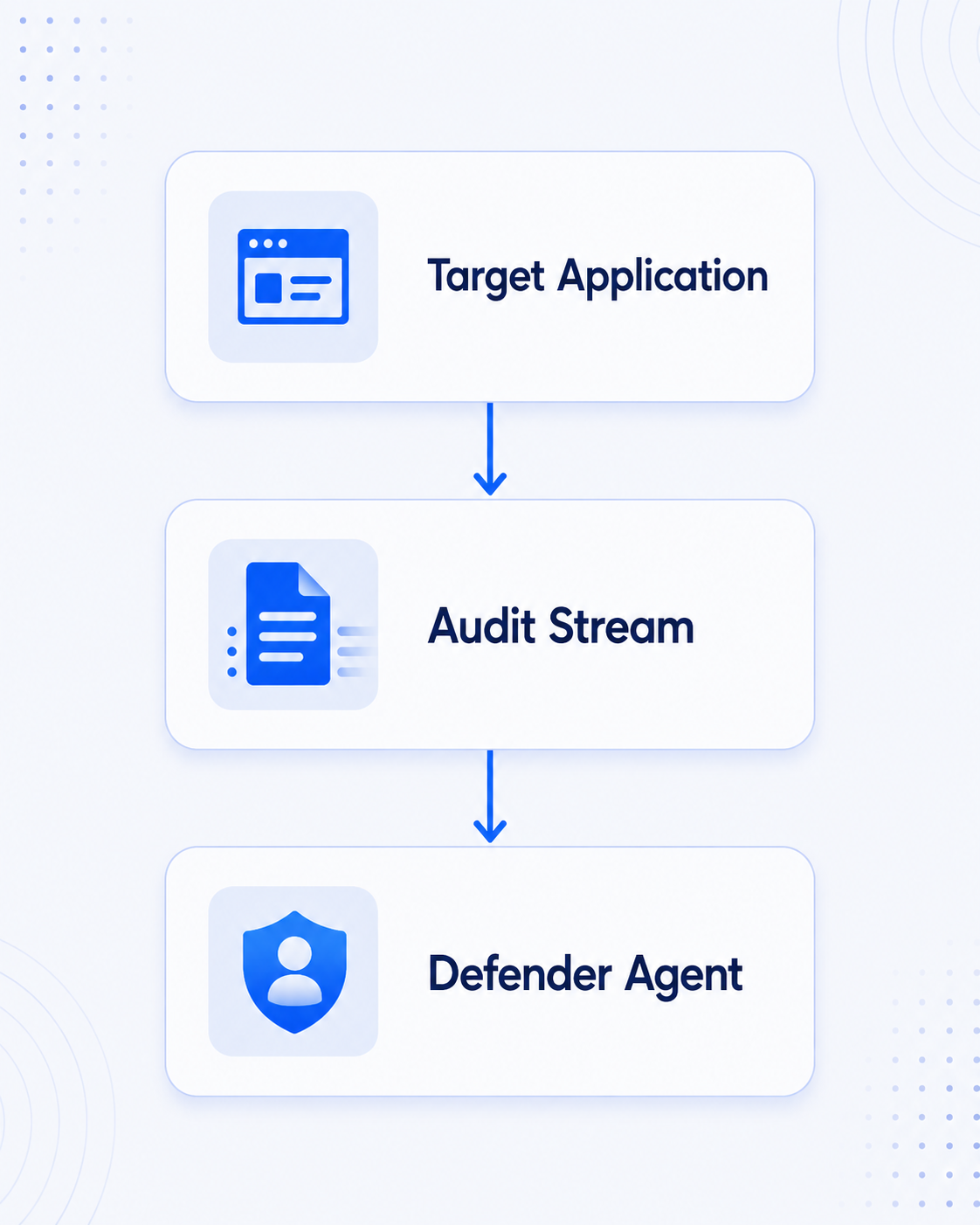 The target itself is deliberately a toy environment rather than a vulnerable Internet system. The purpose is to understand the orchestration pattern, task handoffs, shared context, reasoning, and detection opportunities.
Everything can run locally using containers, which also makes the individual components easier to observe.
Why Separate the Agents?
It would be considerably easier to build one agent and give it every capability. That is exactly why I do not want to do that.
- Separate agents make the responsibilities visible.
- The reconnaissance agent should understand discovery.
- The identity agent should understand identity information.
- The access agent should understand the evidence required for an authorized access-validation task.
- The defender should understand telemetry.
- The coordinator should understand workflow.
This separation gives us something that resembles a small security team rather than a single all-powerful AI assistant. It also gives us much better control over what each component can do.
An identity agent does not automatically need network-scanning capability. A reconnaissance agent does not necessarily need credentials. A defender does not need the ability to interact with the target. That principle becomes increasingly important as agentic systems gain more capabilities.
What We Are Really Experimenting With
The interesting question is not:
Can AI run a reconnaissance command?
Of course it can. The more useful question is:
Can a collection of constrained AI agents collaboratively build an understanding of an environment, decide which evidence matters, hand discoveries between specialist roles, and explain how those decisions were made?
That is a much richer problem. It combines security testing with distributed systems, AI reasoning, tool orchestration, shared memory, authorization, telemetry, and defensive monitoring. It also exposes many of the questions organizations are eventually going to have to answer as AI agents become more involved in security operations.
- How much autonomy should they receive?
- What tools should they be permitted to invoke?
- How should scope be enforced?
- How should one agent trust information produced by another?
- What happens when an agent makes an incorrect inference?
- How do we prevent loops?
- How do we maintain an audit trail?
- How do defenders distinguish legitimate automated security testing from malicious automation?
- And perhaps most importantly, how do we ensure that a human operator can understand why the system did what it did?
From Automated Reconnaissance to Agentic Reconnaissance
Security teams have automated reconnaissance for years. Scripts can execute tools, parse results, populate databases, trigger additional scans, and generate reports. Agentic reconnaissance does not make those techniques obsolete. Instead, it potentially adds a reasoning layer above them. The progression looks something like this:
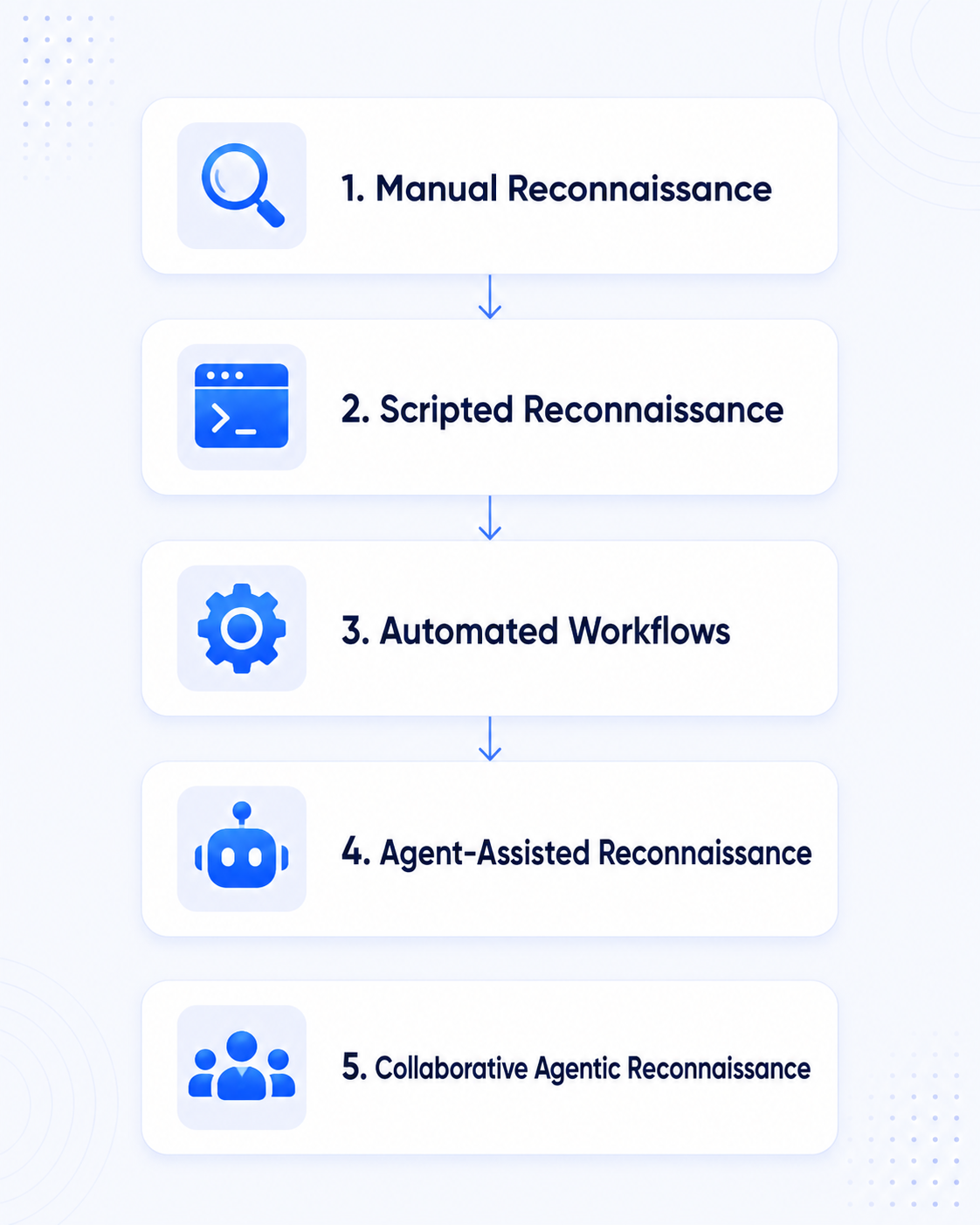
The final stage is not simply "more automation."
It is automation capable of interpreting observations and dynamically deciding which approved action should happen next. That is where this becomes worth experimenting with.
Where We Go Next
In the next article, we will move from the idea to a working lab. We will build a small multi-agent security environment in Docker containing a coordinator, reconnaissance agent, identity agent, access agent, defensive agent, shared state, and a deliberately controlled target application.
Instead of focusing only on whether the agents reach the final objective, we will examine the journey. We will watch the reconnaissance agent discover information about the target. We will see that information placed into shared context and handed to another specialist agent. We will follow the decisions that eventually lead to an authorized access-validation step. At the same time, we will watch the defender observe those activities through the target's audit stream and determine what the testing activity looks like from the defensive side.
That is the real experiment.
We are not trying to build an autonomous hacking system.
We are building a controlled environment for understanding what happens when AI agents become participants in the reconnaissance process.
And once several agents can observe, reason, collaborate, and react to one another, reconnaissance starts to look considerably different from running a scanner and reading the results.